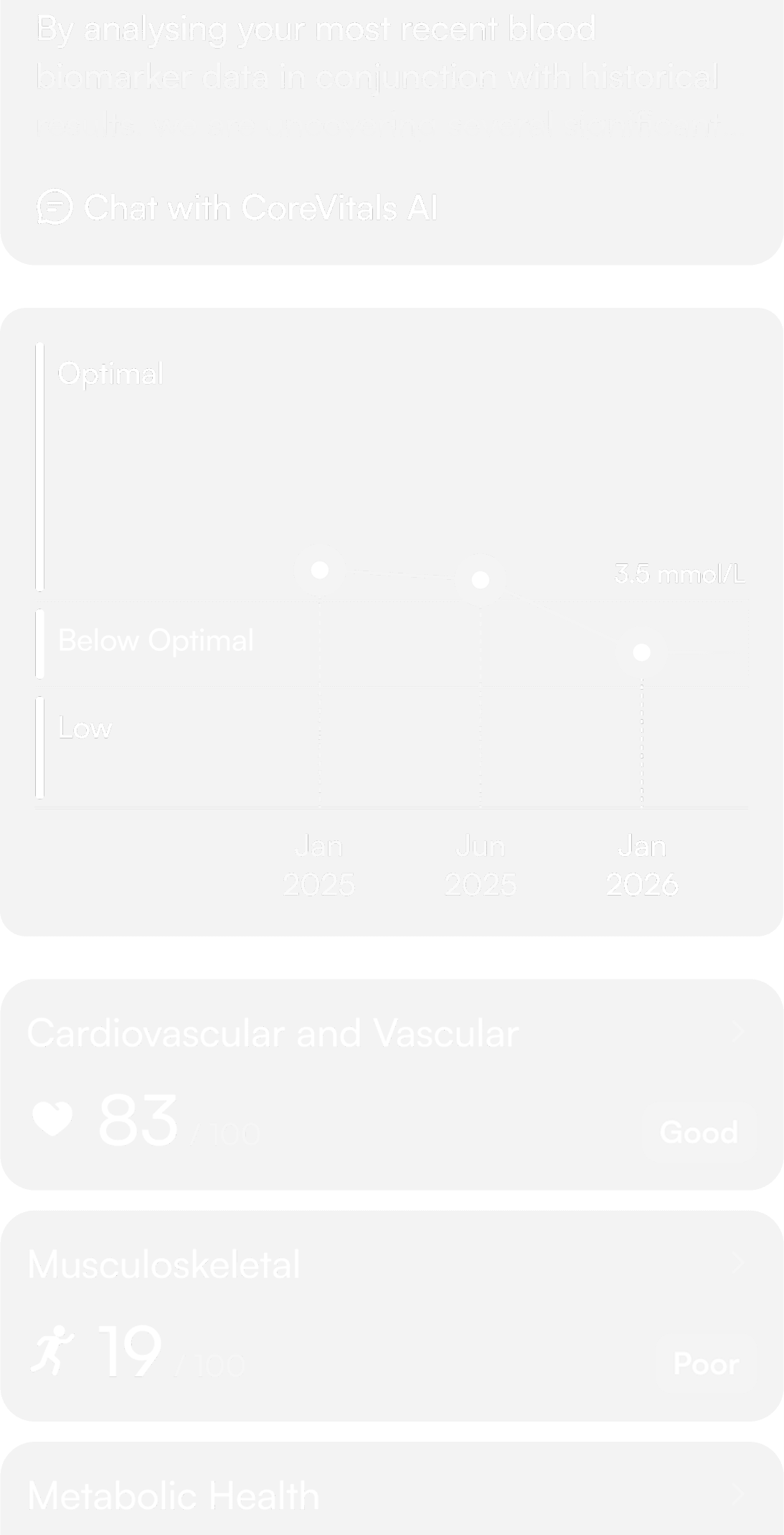
More than one way of looking.
More than once.
A scan sees the structure of your body. A blood test reads its chemistry. Apart, each is half the picture. Together, they show what's happening inside - and we tell you what to do about it.
Two layers. A fuller picture.
MRI shows structure.
What's built, what's changed shape, what a blood test was never going to tell you.
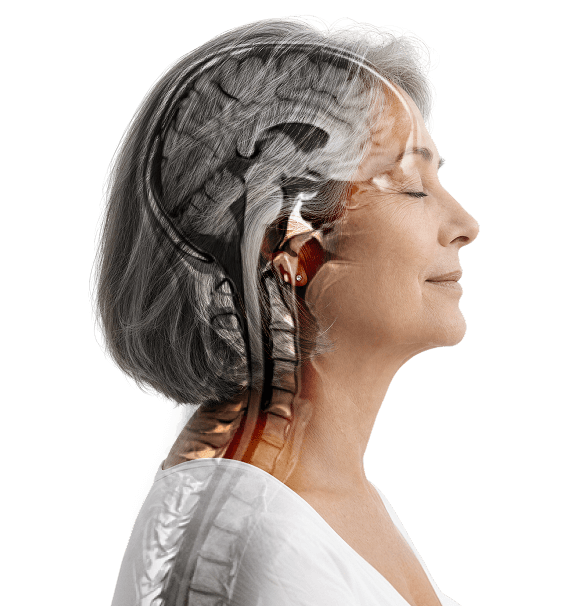
Biomarkers track change.
Blood shifts before you feel anything, so retesting shows the direction your health is moving in - not just a single point in time.

Each layer sees what the other can't.
Take your liver.  Blood flags rising ALT, AST, and GGT, often years before symptoms. MRI can pick up fat build-up, a lesion, or a blockage
 things blood doesn't measure at all.
Every system has a lead.
We don't weigh blood and scan equally everywhere, because your body doesn't either. For some systems, your blood carries the signal. For others, only the scan can see it.

Cardiovascular and vascular
Lipids, ApoB and CRP are the gold standard for risk. The scan adds aneurysm and structural checks. A CTCA is the cardiac gold standard.

Liver
Both modalities pull real weight - the most balanced system of all.

Kidney and urinary
Blood tracks function; the scan finds cysts, stones, masses.

Musculoskeletal
+ DEXAThe scan sees spine and hip joints; DEXA measures bone density.

Metabolic health
+ DEXAHbA1c leads; DEXA body composition adds an independent risk signal.

Thyroid and adrenal
Hormone levels can't be imaged. The scan catches nodules and adenomas.

Reproductive health
Hormones give the functional picture; the scan finds structural change.

Cancer screening
The scan directly visualises organs for masses across the body.

Immune and inflammation
The immune picture is almost entirely blood-derived.

Blood health
Blood test

Brain and neurological
Structure only the MRI can see.

Lungs and respiratory
No blood marker speaks to lung structure.
- 11body systems scored
- 12organs imaged
- 400+conditions screened
- 100+data points read from your blood
One number per system.
One whole-body picture.
Two sources. One index.
Your scan and blood don't sit in two reports.
They combine into one score per system, and one whole-body picture.
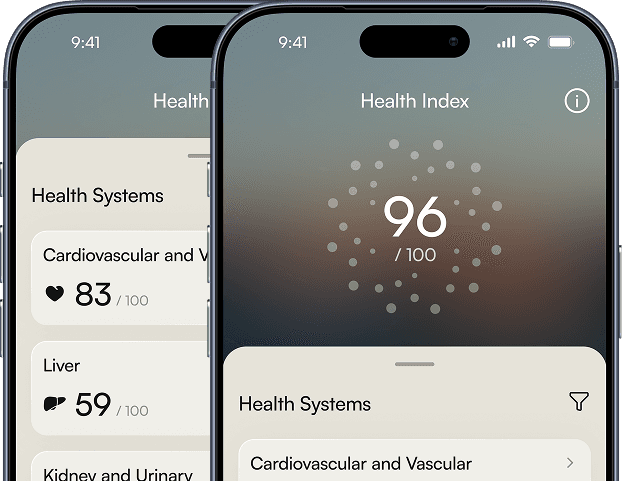
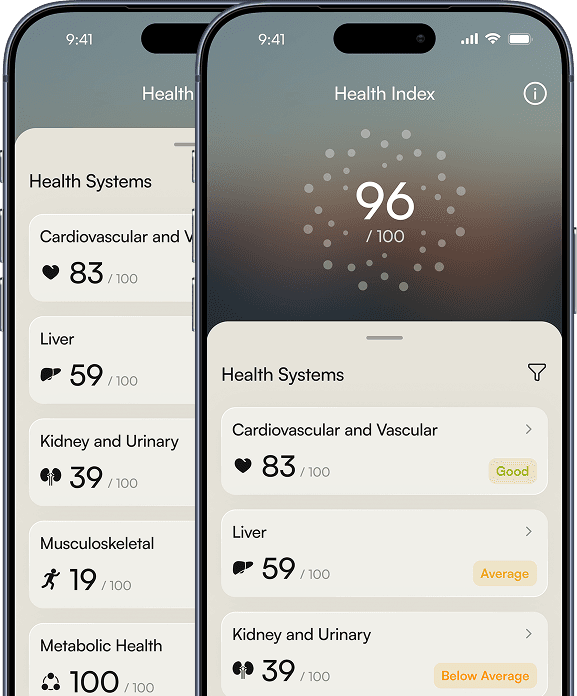
You see where you're strong.
Where to watch. Where to act.
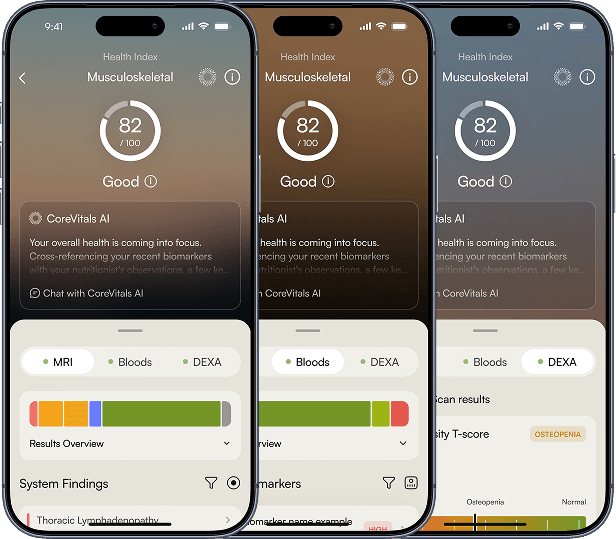
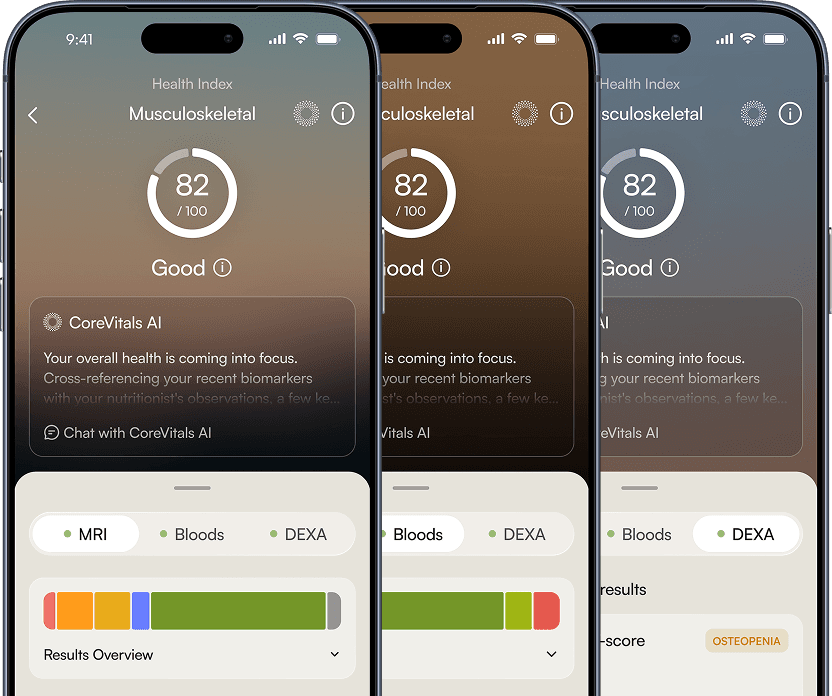
Every test updates it.
What each would miss alone.
A scan alone would never catch rising blood sugar, silent inflammation, a thyroid out of range, or the hormone imbalance behind your fatigue.
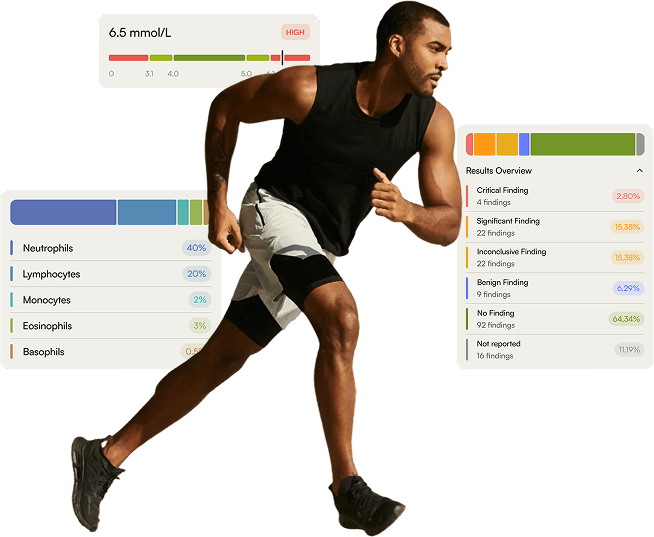
A blood test alone would never see a brain aneurysm, a kidney mass, a spinal disc, or a lung nodule.
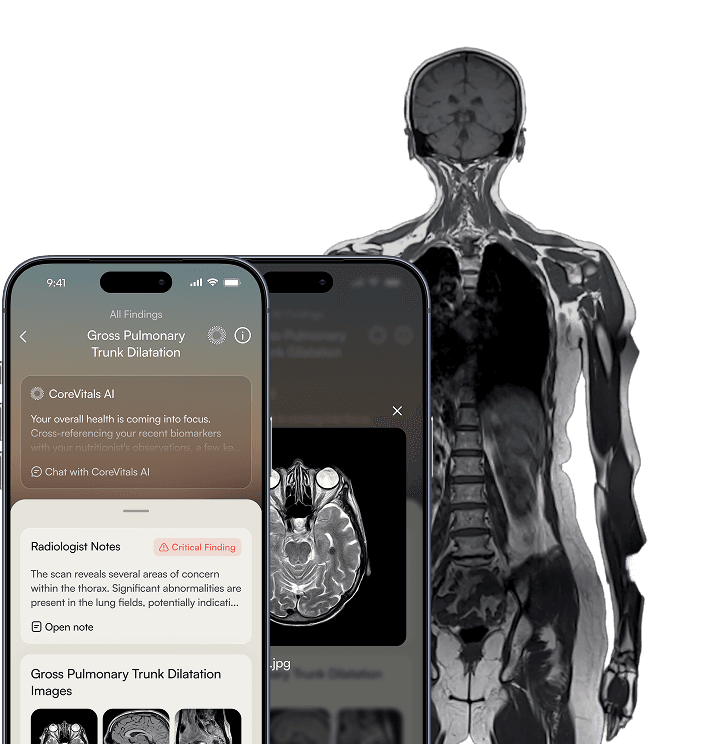
We run both.
So nothing falls through the gap between them.